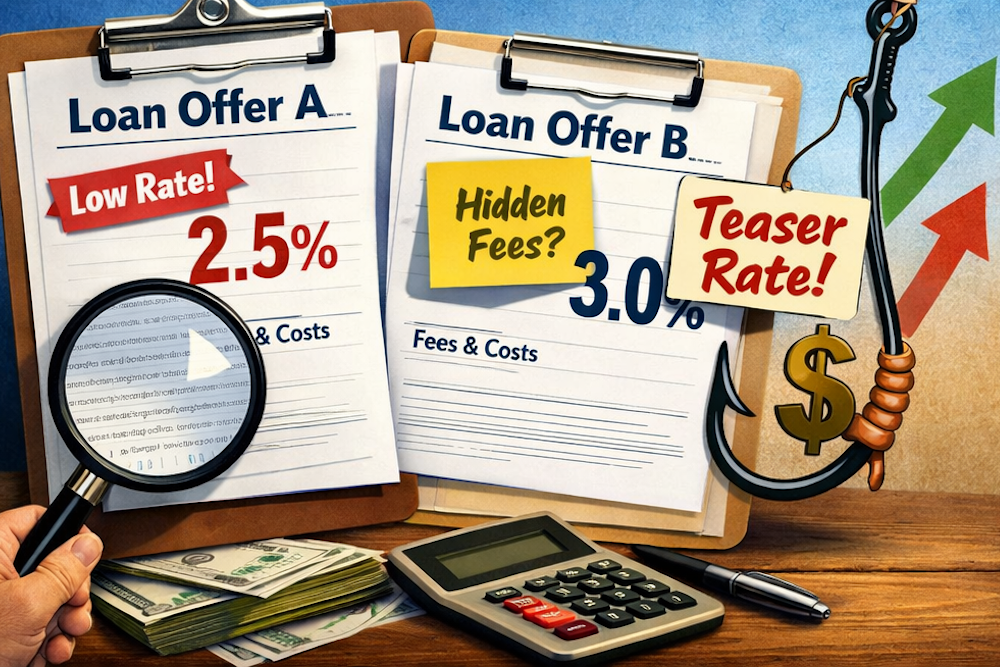
Shopping for a loan can feel like navigating a minefield of marketing tactics designed to grab your attention. Lenders often advertise eye-catching interest rates that seem almost too good to pass up. But here’s the reality: that promotional rate might not tell the whole story. As digital lending platforms proliferate and fintech companies reshape the borrowing landscape, comparing loan offers has become both easier and more complex. The key to making smart borrowing decisions lies in understanding what you’re actually signing up for beyond that flashy headline rate. This guide will help you cut through the noise and identify the true cost of borrowing, so you can make informed choices that align with your financial goals.
Understanding the True Cost Beyond the Teaser Rate
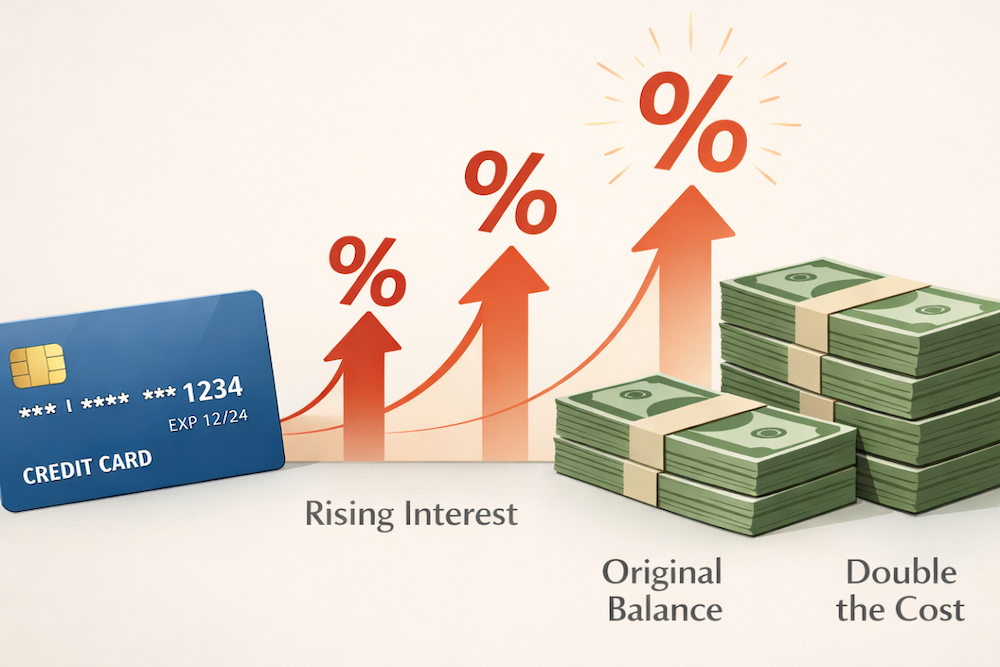
That 2.99% interest rate splashed across your screen might look irresistible, but it’s often just the hook. Lenders use promotional rates—commonly called “teaser rates”—to attract borrowers. These introductory offers typically last anywhere from three to twelve months before adjusting to a much higher rate. The real question you need to ask is: what happens after the promotional period ends? A loan that starts at 2.99% might jump to 15% or even 20% once the honeymoon phase is over.
The Annual Percentage Rate (APR) provides a more complete picture than the interest rate alone. APR includes not just the interest but also mandatory fees like origination charges, processing costs, and other expenses rolled into the loan. This standardized metric allows you to compare apples to apples across different lenders. For instance, one lender might advertise a 5% interest rate with a 3% origination fee, while another offers 6% with no fees. The APR reveals which option actually costs less over the life of your loan.
Total cost calculations matter even more than the APR. You need to understand how much you’ll actually pay back over the entire loan term. A personal loan calculator can help you run these numbers quickly. Consider two scenarios: a $10,000 loan at 7% for three years versus the same amount at 10% for five years. The first option costs about $11,100 total, while the second costs roughly $12,750. The longer term might offer lower monthly payments, but you’ll pay significantly more in interest over time.
Hidden Fees That Inflate Your Costs
Origination fees represent one of the most common hidden costs in loan offers. Lenders typically charge between 1% and 8% of the loan amount just to process your application. Some lenders deduct this fee from your loan proceeds upfront. That means if you borrow $10,000 with a 5% origination fee, you only receive $9,500—but you still owe $10,000 plus interest. This practice effectively increases your borrowing cost beyond what the advertised rate suggests.
Prepayment penalties can turn a seemingly good deal into a trap. Some lenders charge fees if you pay off your loan early, which prevents you from saving money on interest. These penalties can range from a flat fee to a percentage of your remaining balance. Always ask about prepayment terms before signing any loan agreement. The flexibility to pay off debt early without penalty can save you hundreds or thousands of dollars if your financial situation improves.
Late payment fees and other penalty charges add up quickly if you miss payments. Most lenders charge $25 to $50 for late payments, and some even increase your interest rate after a missed payment. Additionally, watch out for returned payment fees, loan modification fees, and charges for paper statements. These seemingly small costs can accumulate over the loan term, especially if you encounter financial difficulties.
Red Flags That Signal a Too-Good-to-Be-True Offer
Pressure tactics should immediately raise your suspicions. Legitimate lenders give you time to review terms and compare offers. If someone insists you must sign “right now” to lock in a rate, or claims the offer expires within hours, walk away. This urgency typically masks unfavorable terms buried in the fine print. Reputable lenders understand that borrowing is a significant financial decision and respect your need to consider all options carefully.
Requests for upfront payment before loan approval represent a major red flag. No legitimate lender asks for fees before approving and funding your loan. Scammers often request advance payments for “insurance,” “processing,” or “guarantee” fees. Once you send the money, they disappear. Authentic lenders deduct fees from your loan proceeds or add them to your balance—they never demand payment before you receive funds.
Unsolicited offers deserve extra scrutiny, especially those arriving via text, email, or robocalls. While legitimate lenders do market their products, be wary of offers that seem to know sensitive information about your financial situation without you providing it. These could indicate data breaches or phishing attempts. Always verify the lender’s legitimacy by checking their website directly (not through links in emails), reading reviews, and confirming their registration with state financial regulators.
The Fine Print: What to Look For
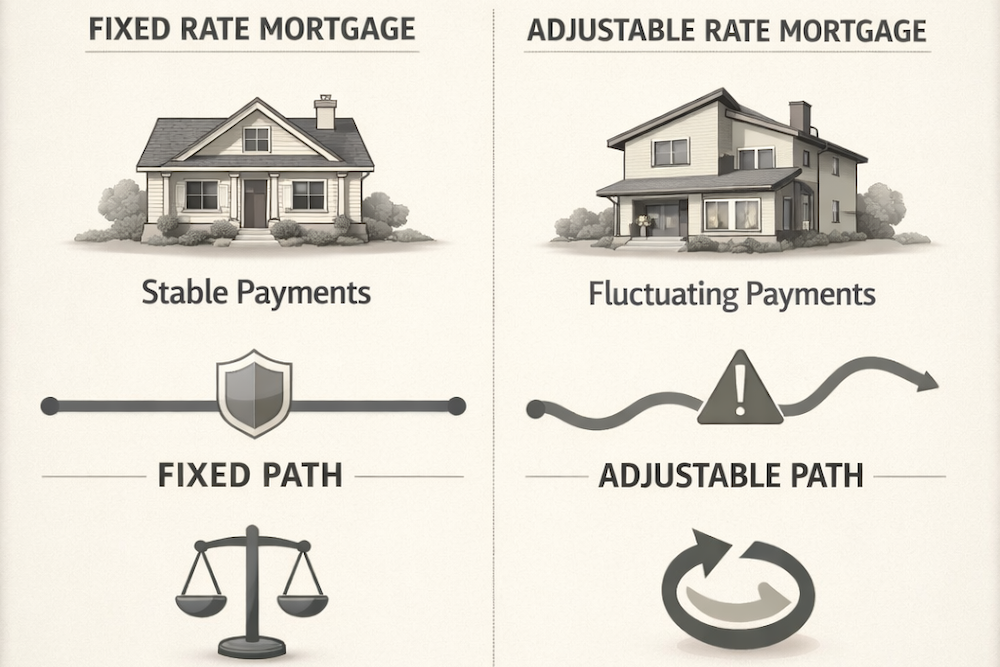
Loan agreements contain crucial information that many borrowers skip. Variable versus fixed rates make a huge difference in your total costs. Fixed rates stay the same throughout the loan term, providing predictable payments. Variable rates fluctuate with market conditions, which means your payment could increase substantially over time. In today’s uncertain economic climate, understanding this distinction is essential for budgeting purposes.
Default terms outline what happens if you can’t make payments. Some lenders accelerate the entire loan balance, making the full amount due immediately if you miss just one payment. Others might seize collateral or pursue aggressive collection actions. Understanding these consequences before you borrow helps you assess whether you can truly afford the loan and what safety nets you might need.
Arbitration clauses limit your legal options if disputes arise. Many loan agreements require you to resolve conflicts through arbitration rather than court, which can favor the lender. While not necessarily a dealbreaker, these clauses represent another factor to consider when comparing offers. Consumer advocacy groups have raised concerns about mandatory arbitration limiting borrower protections.
Using Technology to Compare Offers Effectively
Digital comparison tools have revolutionized how we evaluate loan options. Websites like NerdWallet, Bankrate, and LendingTree aggregate offers from multiple lenders, allowing you to compare rates, terms, and fees side by side. These platforms often provide educational resources to help you understand what you’re looking at. However, remember that these sites earn commissions from lenders, so always verify information independently.
Fintech lending platforms offer streamlined application processes and competitive rates. Companies like SoFi, Marcus by Goldman Sachs, and Upstart use alternative data and technology to assess creditworthiness. These lenders might approve borrowers who traditional banks reject, often with better terms than predatory payday lenders. However, newer fintech companies lack the long track record of established institutions, so research their reputation thoroughly.
Credit monitoring services help you understand your borrowing power before applying. Services like Credit Karma and Credit Sesame provide free credit scores and personalized loan recommendations based on your profile. Checking these resources before shopping for loans prevents unnecessary hard inquiries on your credit report. Each hard inquiry can temporarily lower your score, potentially affecting the rates lenders offer you.
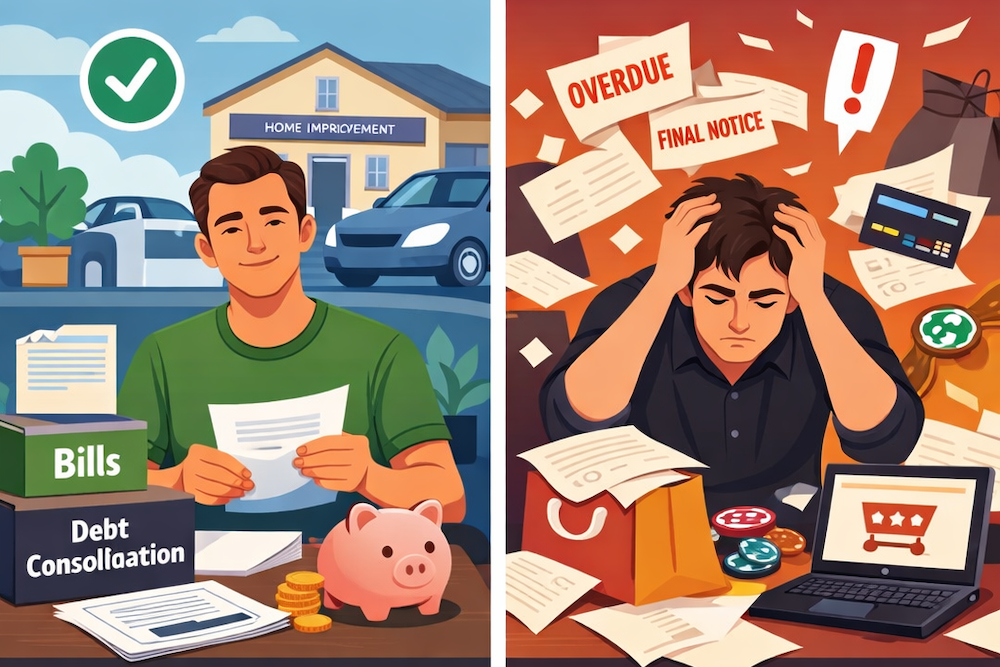
Comparing loan offers requires looking beyond the advertised rate to understand the complete financial picture. The lending landscape has evolved dramatically with digital transformation, giving consumers more options but also more complexity. By focusing on APR, total costs, and hidden fees while watching for red flags, you can protect yourself from predatory lending practices. Take advantage of technology tools that simplify comparisons, but always verify information independently. Remember that the lowest teaser rate rarely represents the best deal. The right loan for you offers transparent terms, affordable payments throughout the entire loan period, and flexibility that matches your financial situation. Taking time to compare offers thoroughly might feel tedious, but it can save you thousands of dollars and years of financial stress.
References
- Consumer Financial Protection Bureau. “What is the difference between a mortgage interest rate and an APR?” https://www.consumerfinance.gov/
- NerdWallet. “Personal Loans: Compare Rates and Apply Online.” https://www.nerdwallet.com/
- Federal Trade Commission. “Shopping for a Loan? How to Avoid Costly Surprises.” https://consumer.ftc.gov/
Shopping for a loan can feel like navigating a minefield of marketing tactics designed to grab your attention. Lenders often advertise eye-catching interest rates that seem almost too good to pass up. But here’s the reality: that promotional rate might not tell the whole story. As digital lending platforms proliferate and fintech companies reshape the borrowing landscape, comparing loan offers has become both easier and more complex. The key to making smart borrowing decisions lies in understanding what you’re actually signing up for beyond that flashy headline rate. This guide will help you cut through the noise and identify the true cost of borrowing, so you can make informed choices that align with your financial goals.
Understanding the True Cost Beyond the Teaser Rate
That 2.99% interest rate splashed across your screen might look irresistible, but it’s often just the hook. Lenders use promotional rates—commonly called “teaser rates”—to attract borrowers. These introductory offers typically last anywhere from three to twelve months before adjusting to a much higher rate. The real question you need to ask is: what happens after the promotional period ends? A loan that starts at 2.99% might jump to 15% or even 20% once the honeymoon phase is over.
The Annual Percentage Rate (APR) provides a more complete picture than the interest rate alone. APR includes not just the interest but also mandatory fees like origination charges, processing costs, and other expenses rolled into the loan. This standardized metric allows you to compare apples to apples across different lenders. For instance, one lender might advertise a 5% interest rate with a 3% origination fee, while another offers 6% with no fees. The APR reveals which option actually costs less over the life of your loan.
Total cost calculations matter even more than the APR. You need to understand how much you’ll actually pay back over the entire loan term. A personal loan calculator can help you run these numbers quickly. Consider two scenarios: a $10,000 loan at 7% for three years versus the same amount at 10% for five years. The first option costs about $11,100 total, while the second costs roughly $12,750. The longer term might offer lower monthly payments, but you’ll pay significantly more in interest over time.
Hidden Fees That Inflate Your Costs
Origination fees represent one of the most common hidden costs in loan offers. Lenders typically charge between 1% and 8% of the loan amount just to process your application. Some lenders deduct this fee from your loan proceeds upfront. That means if you borrow $10,000 with a 5% origination fee, you only receive $9,500—but you still owe $10,000 plus interest. This practice effectively increases your borrowing cost beyond what the advertised rate suggests.
Prepayment penalties can turn a seemingly good deal into a trap. Some lenders charge fees if you pay off your loan early, which prevents you from saving money on interest. These penalties can range from a flat fee to a percentage of your remaining balance. Always ask about prepayment terms before signing any loan agreement. The flexibility to pay off debt early without penalty can save you hundreds or thousands of dollars if your financial situation improves.
Late payment fees and other penalty charges add up quickly if you miss payments. Most lenders charge $25 to $50 for late payments, and some even increase your interest rate after a missed payment. Additionally, watch out for returned payment fees, loan modification fees, and charges for paper statements. These seemingly small costs can accumulate over the loan term, especially if you encounter financial difficulties.
Red Flags That Signal a Too-Good-to-Be-True Offer
Pressure tactics should immediately raise your suspicions. Legitimate lenders give you time to review terms and compare offers. If someone insists you must sign “right now” to lock in a rate, or claims the offer expires within hours, walk away. This urgency typically masks unfavorable terms buried in the fine print. Reputable lenders understand that borrowing is a significant financial decision and respect your need to consider all options carefully.
Requests for upfront payment before loan approval represent a major red flag. No legitimate lender asks for fees before approving and funding your loan. Scammers often request advance payments for “insurance,” “processing,” or “guarantee” fees. Once you send the money, they disappear. Authentic lenders deduct fees from your loan proceeds or add them to your balance—they never demand payment before you receive funds.
Unsolicited offers deserve extra scrutiny, especially those arriving via text, email, or robocalls. While legitimate lenders do market their products, be wary of offers that seem to know sensitive information about your financial situation without you providing it. These could indicate data breaches or phishing attempts. Always verify the lender’s legitimacy by checking their website directly (not through links in emails), reading reviews, and confirming their registration with state financial regulators.
The Fine Print: What to Look For
Loan agreements contain crucial information that many borrowers skip. Variable versus fixed rates make a huge difference in your total costs. Fixed rates stay the same throughout the loan term, providing predictable payments. Variable rates fluctuate with market conditions, which means your payment could increase substantially over time. In today’s uncertain economic climate, understanding this distinction is essential for budgeting purposes.
Default terms outline what happens if you can’t make payments. Some lenders accelerate the entire loan balance, making the full amount due immediately if you miss just one payment. Others might seize collateral or pursue aggressive collection actions. Understanding these consequences before you borrow helps you assess whether you can truly afford the loan and what safety nets you might need.
Arbitration clauses limit your legal options if disputes arise. Many loan agreements require you to resolve conflicts through arbitration rather than court, which can favor the lender. While not necessarily a dealbreaker, these clauses represent another factor to consider when comparing offers. Consumer advocacy groups have raised concerns about mandatory arbitration limiting borrower protections.
Using Technology to Compare Offers Effectively
Digital comparison tools have revolutionized how we evaluate loan options. Websites like NerdWallet, Bankrate, and LendingTree aggregate offers from multiple lenders, allowing you to compare rates, terms, and fees side by side. These platforms often provide educational resources to help you understand what you’re looking at. However, remember that these sites earn commissions from lenders, so always verify information independently.
Fintech lending platforms offer streamlined application processes and competitive rates. Companies like SoFi, Marcus by Goldman Sachs, and Upstart use alternative data and technology to assess creditworthiness. These lenders might approve borrowers who traditional banks reject, often with better terms than predatory payday lenders. However, newer fintech companies lack the long track record of established institutions, so research their reputation thoroughly.
Credit monitoring services help you understand your borrowing power before applying. Services like Credit Karma and Credit Sesame provide free credit scores and personalized loan recommendations based on your profile. Checking these resources before shopping for loans prevents unnecessary hard inquiries on your credit report. Each hard inquiry can temporarily lower your score, potentially affecting the rates lenders offer you.
Comparing loan offers requires looking beyond the advertised rate to understand the complete financial picture. The lending landscape has evolved dramatically with digital transformation, giving consumers more options but also more complexity. By focusing on APR, total costs, and hidden fees while watching for red flags, you can protect yourself from predatory lending practices. Take advantage of technology tools that simplify comparisons, but always verify information independently. Remember that the lowest teaser rate rarely represents the best deal. The right loan for you offers transparent terms, affordable payments throughout the entire loan period, and flexibility that matches your financial situation. Taking time to compare offers thoroughly might feel tedious, but it can save you thousands of dollars and years of financial stress.
References
- Consumer Financial Protection Bureau. “What is the difference between a mortgage interest rate and an APR?” https://www.consumerfinance.gov/
- NerdWallet. “Personal Loans: Compare Rates and Apply Online.” https://www.nerdwallet.com/
- Federal Trade Commission. “Shopping for a Loan? How to Avoid Costly Surprises.” https://consumer.ftc.gov/

)