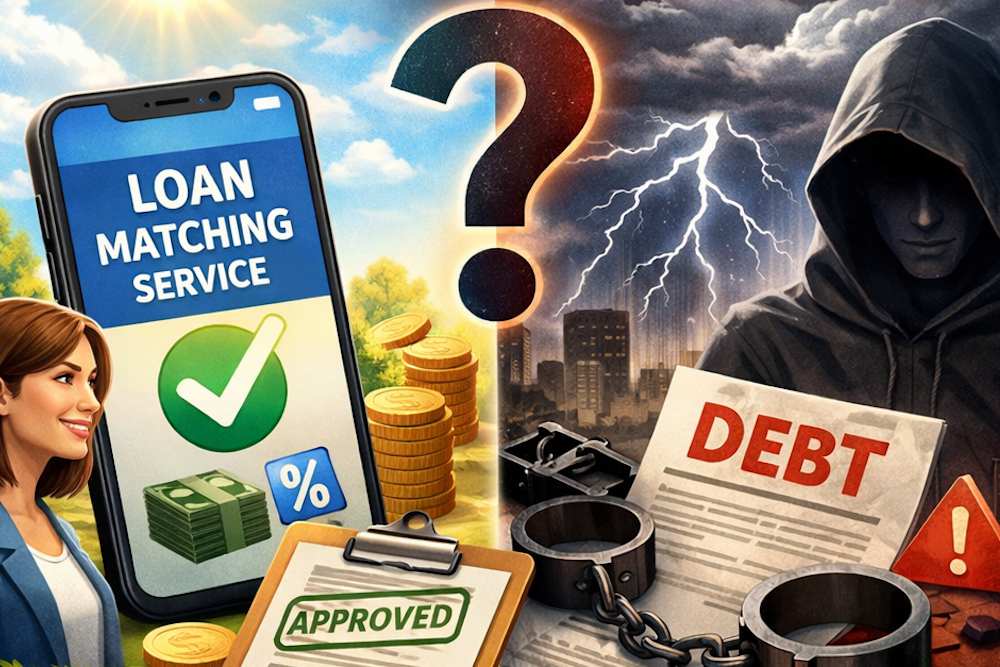
Shopping for a loan used to mean walking into banks and credit unions, filling out applications one by one, and waiting days for responses. Today, loan matching services promise to simplify this process dramatically. You enter your information once, and multiple lenders compete for your business. Sounds convenient, right? These platforms have exploded in popularity, especially among millennials who prefer digital solutions for financial decisions. But convenience often comes with strings attached. Before you hand over your personal information to a loan matching service, you need to understand exactly what happens behind the scenes. The question isn’t whether these services work—they do—but whether the trade-offs align with your financial goals and privacy expectations.
The Basic Mechanics of Loan Matching Services
Loan matching services function as digital middlemen between borrowers and lenders. You visit their website, complete a single application, and provide details about your financial situation. The platform then uses algorithms to match you with potential lenders from their network. Within minutes, you might receive multiple loan offers. The service earns money when lenders pay them referral fees or commissions for qualified leads. This business model means the platform has incentives to connect you with lenders quickly, though not necessarily with the best deals available in the entire market.
The technology behind these platforms has become increasingly sophisticated. Many services use soft credit checks initially, which don’t impact your credit score. They analyze factors like your income, employment history, debt-to-income ratio, and credit profile. Some platforms employ machine learning to predict which lenders will most likely approve your application. This can save you time and reduce the number of hard credit inquiries on your report. However, the matching process relies entirely on the information you provide being accurate and complete.
Different platforms specialize in different loan types. Some focus on personal loans, while others concentrate on mortgages, auto loans, or business financing. The largest platforms maintain relationships with dozens or even hundreds of lenders. These networks might include traditional banks, credit unions, and online lenders. Understanding which lenders participate in a platform’s network helps you gauge whether you’re truly getting comprehensive market coverage or just access to a curated selection.
What Happens to Your Application
Once you submit your information, the platform doesn’t simply send it to one lender. Your data gets distributed to multiple lenders simultaneously. Each lender evaluates your application independently using their own criteria. Some might pre-approve you immediately. Others might request additional documentation. The platform typically displays offers you’ve received in a dashboard format, allowing you to compare rates, terms, and fees side by side. This comparison feature represents one of the genuine benefits these services provide.
However, the process isn’t always as straightforward as it appears. Some platforms sell your information to lenders as a “lead” before you’ve actually agreed to work with anyone. This means lenders might contact you directly via phone, email, or text message. The volume of follow-up communication can become overwhelming quickly. You might receive calls from lenders you’ve never heard of, all because you filled out one form online. This aggressive marketing approach has drawn criticism from consumer advocates who argue that borrowers don’t always understand they’re opening themselves up to this barrage.
The timeline from application to funding varies considerably. Some online lenders can deposit funds within 24 hours of approval. Traditional banks might take several days or even weeks. The loan matching service itself doesn’t control this timeline—that depends entirely on the individual lender you choose. The platform’s role essentially ends once you select a lender and begin working directly with them. At that point, you’re subject to that lender’s processes, requirements, and customer service standards.
The Privacy Trade-Off -Your Data as Currency
When you use a loan matching service, you’re not the customer—you’re the product. Lenders pay these platforms for access to qualified borrowers. Your personal information, including Social Security number, income details, employment history, and financial obligations, becomes valuable data that the platform monetizes. This fundamental business model creates inherent conflicts of interest. The platform benefits from sharing your information widely, while you might prefer more selective distribution. Reading the privacy policy carefully matters more with these services than almost any other financial tool.
Many platforms reserve the right to share your information with “partners” and “affiliates.” These terms can be surprisingly broad. Your data might end up with insurance companies, credit card issuers, or other financial service providers you never intended to contact. Some services bundle consumer data and sell it to third parties for marketing purposes. The Federal Trade Commission has investigated several loan matching services for inadequate disclosure of these practices. In 2021, the FTC took action against a major player in this space for deceiving consumers about how their information would be used.
You have limited control once your information enters these networks. Unlike a traditional loan application at a single bank, you can’t easily retract or delete your data after submission. The information spreads across multiple systems operated by different companies. Even if you decide not to proceed with any loan offers, your data remains in various databases. This persistence creates long-term privacy implications that extend far beyond your immediate borrowing needs. Identity theft risks increase whenever your sensitive information gets distributed more widely.
Security Concerns and Data Breaches
The financial services industry faces constant cybersecurity threats. Loan matching platforms store massive amounts of sensitive consumer data, making them attractive targets for hackers. A single breach can expose thousands or millions of consumers’ personal information. In recent years, several fintech companies have experienced significant data breaches. While established platforms invest heavily in security measures, no system offers perfect protection. You’re trusting not just the matching service but every lender in their network to maintain adequate security protocols.
Regulatory oversight of these platforms remains inconsistent. Traditional banks face strict regulations about data protection and consumer privacy. Loan matching services often operate in a gray area with less stringent oversight. The Consumer Financial Protection Bureau has issued guidance about lead generators and loan matching services, but enforcement varies. Some states have implemented their own regulations, creating a patchwork of rules that platforms must navigate. This regulatory uncertainty doesn’t serve consumers well, as it leaves gaps in protection and accountability.
Balancing convenience against privacy requires conscious decision-making. You might decide the time savings and potential rate benefits outweigh the privacy trade-offs. Alternatively, you might prefer the traditional approach of contacting lenders directly. Either choice is valid, but it should be informed. Before using any loan matching service, research their reputation, read recent reviews, and understand exactly what happens to your information. Check whether they allow you to opt out of sharing your data with third parties. Look for platforms that use encryption and have clear data retention policies. Your financial information deserves protection, and you have the right to know who accesses it and why.
Loan matching services represent the broader trend of digital transformation in personal finance. They offer genuine convenience and can help you discover competitive loan offers you might not find otherwise. For time-strapped millennials juggling multiple financial priorities, these platforms provide an appealing solution. However, convenience shouldn’t come at the cost of privacy and data security. The most successful approach involves using these tools strategically while understanding their limitations and risks. Before submitting an application, verify the platform’s credibility, read user reviews, and carefully review their privacy policies. Consider starting with platforms that have strong reputations and transparent practices. Remember that you’re not obligated to accept any offer you receive, and you can always pursue traditional lending channels if the matching service doesn’t meet your needs. As fintech continues evolving, staying informed about how these services operate empowers you to make choices that align with both your financial goals and your comfort level with data sharing.
References
- Federal Trade Commission. “FTC Takes Action Against Lending Tree for Deceiving Consumers About ‘Free’ Credit Scores.” FTC.gov, https://www.ftc.gov/news-events/news/press-releases/2021/10/ftc-takes-action-against-lendingtree-deceiving-consumers-about-free-credit-scores
- Frankel, Rob. “How Do Loan Matching Services Work?” NerdWallet, https://www.nerdwallet.com/article/loans/personal-loans/loan-matching-services
- Consumer Financial Protection Bureau. “What You Should Know About Lead Generators.” ConsumerFinance.gov, https://www.consumerfinance.gov/about-us/blog/what-you-should-know-about-lead-generators/
Shopping for a loan used to mean walking into banks and credit unions, filling out applications one by one, and waiting days for responses. Today, loan matching services promise to simplify this process dramatically. You enter your information once, and multiple lenders compete for your business. Sounds convenient, right? These platforms have exploded in popularity, especially among millennials who prefer digital solutions for financial decisions. But convenience often comes with strings attached. Before you hand over your personal information to a loan matching service, you need to understand exactly what happens behind the scenes. The question isn’t whether these services work—they do—but whether the trade-offs align with your financial goals and privacy expectations.
The Basic Mechanics of Loan Matching Services
Loan matching services function as digital middlemen between borrowers and lenders. You visit their website, complete a single application, and provide details about your financial situation. The platform then uses algorithms to match you with potential lenders from their network. Within minutes, you might receive multiple loan offers. The service earns money when lenders pay them referral fees or commissions for qualified leads. This business model means the platform has incentives to connect you with lenders quickly, though not necessarily with the best deals available in the entire market.
The technology behind these platforms has become increasingly sophisticated. Many services use soft credit checks initially, which don’t impact your credit score. They analyze factors like your income, employment history, debt-to-income ratio, and credit profile. Some platforms employ machine learning to predict which lenders will most likely approve your application. This can save you time and reduce the number of hard credit inquiries on your report. However, the matching process relies entirely on the information you provide being accurate and complete.
Different platforms specialize in different loan types. Some focus on personal loans, while others concentrate on mortgages, auto loans, or business financing. The largest platforms maintain relationships with dozens or even hundreds of lenders. These networks might include traditional banks, credit unions, and online lenders. Understanding which lenders participate in a platform’s network helps you gauge whether you’re truly getting comprehensive market coverage or just access to a curated selection.
What Happens to Your Application
Once you submit your information, the platform doesn’t simply send it to one lender. Your data gets distributed to multiple lenders simultaneously. Each lender evaluates your application independently using their own criteria. Some might pre-approve you immediately. Others might request additional documentation. The platform typically displays offers you’ve received in a dashboard format, allowing you to compare rates, terms, and fees side by side. This comparison feature represents one of the genuine benefits these services provide.
However, the process isn’t always as straightforward as it appears. Some platforms sell your information to lenders as a “lead” before you’ve actually agreed to work with anyone. This means lenders might contact you directly via phone, email, or text message. The volume of follow-up communication can become overwhelming quickly. You might receive calls from lenders you’ve never heard of, all because you filled out one form online. This aggressive marketing approach has drawn criticism from consumer advocates who argue that borrowers don’t always understand they’re opening themselves up to this barrage.
The timeline from application to funding varies considerably. Some online lenders can deposit funds within 24 hours of approval. Traditional banks might take several days or even weeks. The loan matching service itself doesn’t control this timeline—that depends entirely on the individual lender you choose. The platform’s role essentially ends once you select a lender and begin working directly with them. At that point, you’re subject to that lender’s processes, requirements, and customer service standards.
The Privacy Trade-Off -Your Data as Currency
When you use a loan matching service, you’re not the customer—you’re the product. Lenders pay these platforms for access to qualified borrowers. Your personal information, including Social Security number, income details, employment history, and financial obligations, becomes valuable data that the platform monetizes. This fundamental business model creates inherent conflicts of interest. The platform benefits from sharing your information widely, while you might prefer more selective distribution. Reading the privacy policy carefully matters more with these services than almost any other financial tool.
Many platforms reserve the right to share your information with “partners” and “affiliates.” These terms can be surprisingly broad. Your data might end up with insurance companies, credit card issuers, or other financial service providers you never intended to contact. Some services bundle consumer data and sell it to third parties for marketing purposes. The Federal Trade Commission has investigated several loan matching services for inadequate disclosure of these practices. In 2021, the FTC took action against a major player in this space for deceiving consumers about how their information would be used.
You have limited control once your information enters these networks. Unlike a traditional loan application at a single bank, you can’t easily retract or delete your data after submission. The information spreads across multiple systems operated by different companies. Even if you decide not to proceed with any loan offers, your data remains in various databases. This persistence creates long-term privacy implications that extend far beyond your immediate borrowing needs. Identity theft risks increase whenever your sensitive information gets distributed more widely.
Security Concerns and Data Breaches
The financial services industry faces constant cybersecurity threats. Loan matching platforms store massive amounts of sensitive consumer data, making them attractive targets for hackers. A single breach can expose thousands or millions of consumers’ personal information. In recent years, several fintech companies have experienced significant data breaches. While established platforms invest heavily in security measures, no system offers perfect protection. You’re trusting not just the matching service but every lender in their network to maintain adequate security protocols.
Regulatory oversight of these platforms remains inconsistent. Traditional banks face strict regulations about data protection and consumer privacy. Loan matching services often operate in a gray area with less stringent oversight. The Consumer Financial Protection Bureau has issued guidance about lead generators and loan matching services, but enforcement varies. Some states have implemented their own regulations, creating a patchwork of rules that platforms must navigate. This regulatory uncertainty doesn’t serve consumers well, as it leaves gaps in protection and accountability.
Balancing convenience against privacy requires conscious decision-making. You might decide the time savings and potential rate benefits outweigh the privacy trade-offs. Alternatively, you might prefer the traditional approach of contacting lenders directly. Either choice is valid, but it should be informed. Before using any loan matching service, research their reputation, read recent reviews, and understand exactly what happens to your information. Check whether they allow you to opt out of sharing your data with third parties. Look for platforms that use encryption and have clear data retention policies. Your financial information deserves protection, and you have the right to know who accesses it and why.
Loan matching services represent the broader trend of digital transformation in personal finance. They offer genuine convenience and can help you discover competitive loan offers you might not find otherwise. For time-strapped millennials juggling multiple financial priorities, these platforms provide an appealing solution. However, convenience shouldn’t come at the cost of privacy and data security. The most successful approach involves using these tools strategically while understanding their limitations and risks. Before submitting an application, verify the platform’s credibility, read user reviews, and carefully review their privacy policies. Consider starting with platforms that have strong reputations and transparent practices. Remember that you’re not obligated to accept any offer you receive, and you can always pursue traditional lending channels if the matching service doesn’t meet your needs. As fintech continues evolving, staying informed about how these services operate empowers you to make choices that align with both your financial goals and your comfort level with data sharing.
References
- Federal Trade Commission. “FTC Takes Action Against Lending Tree for Deceiving Consumers About ‘Free’ Credit Scores.” FTC.gov, https://www.ftc.gov/news-events/news/press-releases/2021/10/ftc-takes-action-against-lendingtree-deceiving-consumers-about-free-credit-scores
- Frankel, Rob. “How Do Loan Matching Services Work?” NerdWallet, https://www.nerdwallet.com/article/loans/personal-loans/loan-matching-services
- Consumer Financial Protection Bureau. “What You Should Know About Lead Generators.” ConsumerFinance.gov, https://www.consumerfinance.gov/about-us/blog/what-you-should-know-about-lead-generators/




)